Diego Garcia: Paradise, Power, and the Politics of an Island Few Will Ever See
Far out in the middle of the Indian Ocean, nearly equidistant from Africa, the Middle East, and Southeast Asia, lies a place that most people will never visit. Diego Garcia is a tropical coral atoll of brilliant turquoise waters, white sand, and palm-lined beaches, exactly the sort of place that travel posters usually promise but rarely deliver.
Except this one is not for tourists.
Instead, Diego Garcia is home to one of the most strategically important military installations on the planet, a base that has quietly played a role in conflicts across multiple continents. Beneath the island’s idyllic scenery sits a story of Cold War strategy, colonial politics, and one of the most controversial forced displacements of an island population in the modern era.
And like many geopolitical stories, it starts with being in the right place at the wrong time.
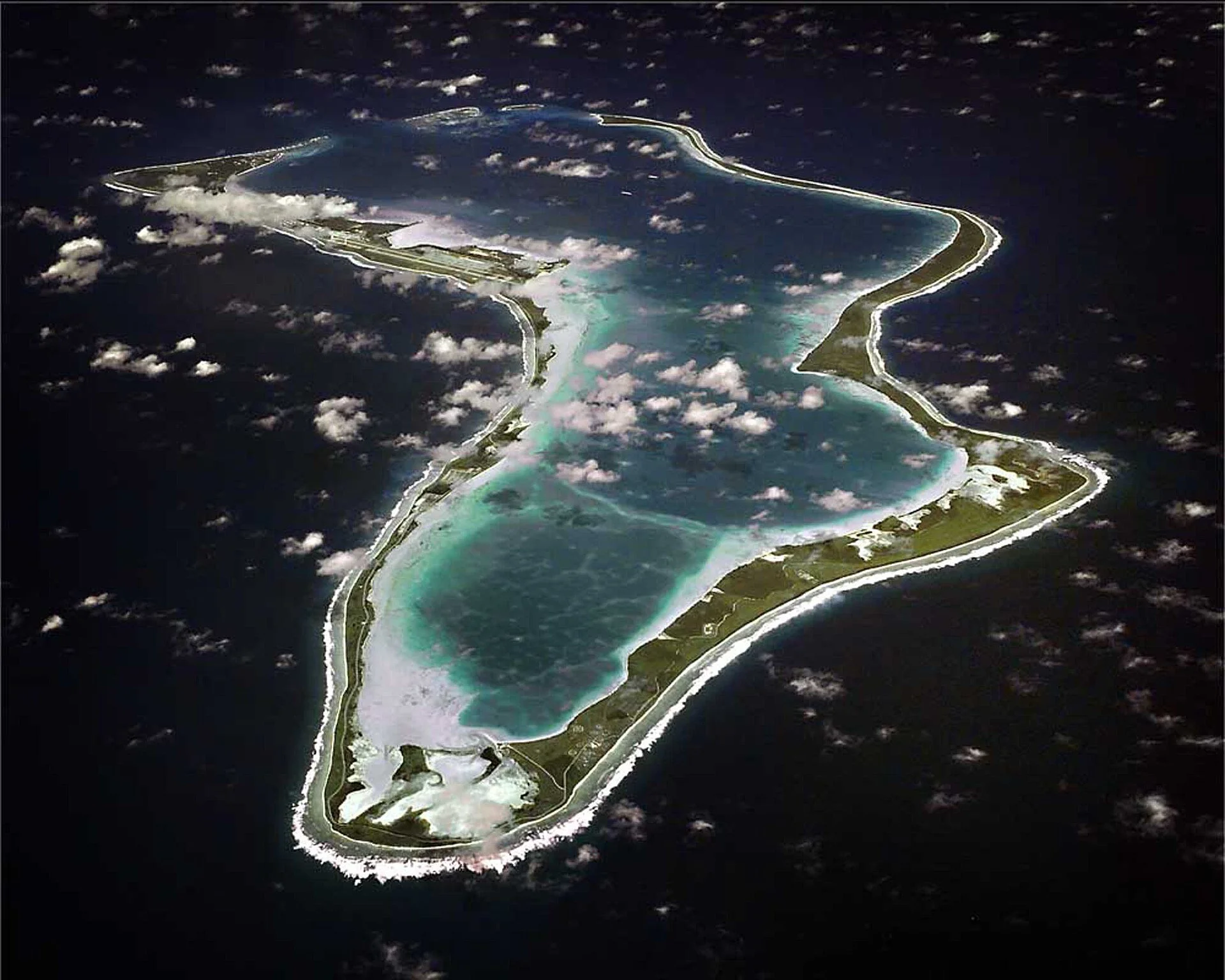
Credit: NASA Earth Observatory, Public Domain
Diego Garcia is the largest island in the Chagos Archipelago, a chain of remote coral islands scattered across the central Indian Ocean. On a map it appears almost insignificant, a curved strip of land wrapped around a vast lagoon. But its location places it at the crossroads of some of the most important maritime routes in the world.
From here, aircraft and naval forces can reach the Middle East, East Africa, South Asia, and large portions of Southeast Asia. Oil tankers pass through nearby sea lanes carrying fuel from the Persian Gulf to global markets. Trade routes linking Europe and Asia cut across the surrounding waters.
In short, Diego Garcia sits in a position that military planners love and diplomats argue about.
The strategic value of the island became especially clear during the Cold War. In the 1960s, as tensions between the United States and the Soviet Union expanded into the Indian Ocean, Western planners began looking for a base that could support long-range bombers and naval forces far from the vulnerability of mainland territory.
Diego Garcia was almost perfect.
The United Kingdom, which administered the Chagos islands as a colonial territory, separated the archipelago from Mauritius in 1965 and formed what is now known as the British Indian Ocean Territory. Shortly afterward, Britain and the United States reached an agreement allowing the construction of a major military facility on Diego Garcia.
The island’s massive lagoon became a sheltered anchorage for naval vessels, while a long runway was built capable of supporting heavy bombers and cargo aircraft. Over the decades the base expanded into a crucial logistics hub for U.S. operations throughout the region.
It has supported missions during the Gulf War, the wars in Afghanistan and Iraq, and numerous other operations that rarely make headlines. The island’s remoteness makes it ideal for exactly that sort of work.
But before Diego Garcia became a military outpost, it was something else entirely.
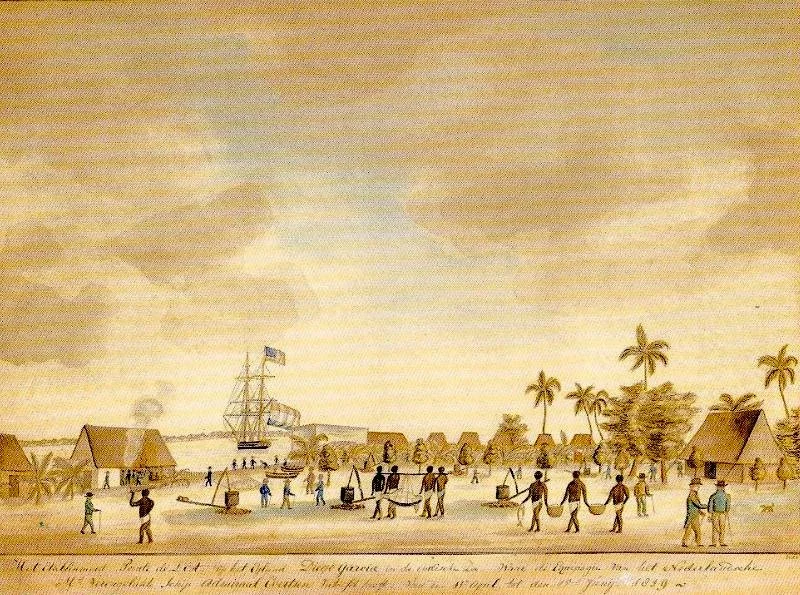
Credit: zianet.com, Important Dates of the
Provisional People's Democratic
Republic of Diego Garcia
For generations, the Chagos islands were home to a small community known as the Chagossians. Their ancestors had lived on the islands since the eighteenth century, working primarily on coconut plantations that produced copra, a product used to manufacture coconut oil.
Life on the islands was quiet and isolated. Families lived in small villages, fished in the surrounding waters, and maintained plantations that had existed since colonial times. That changed abruptly between the late 1960s and early 1970s.
As construction of the military base began, the island’s civilian population was removed entirely. Roughly 1,500 to 2,000 Chagossians were relocated to Mauritius, Seychelles, or the United Kingdom, often with little warning or support. Many families found themselves arriving in unfamiliar places without housing, employment, or compensation.
For the people who had lived there, the displacement became a defining historical trauma. In the decades since, Chagossian communities have fought legal battles seeking the right to return to their homeland. Court cases have taken place in British courts, international tribunals, and the United Nations, turning the archipelago into a long-running geopolitical dispute.
Mauritius, which gained independence from Britain in 1968, argues that the islands were unlawfully separated from its territory during the final years of colonial rule. The Mauritian government has repeatedly called for the return of the Chagos Archipelago.
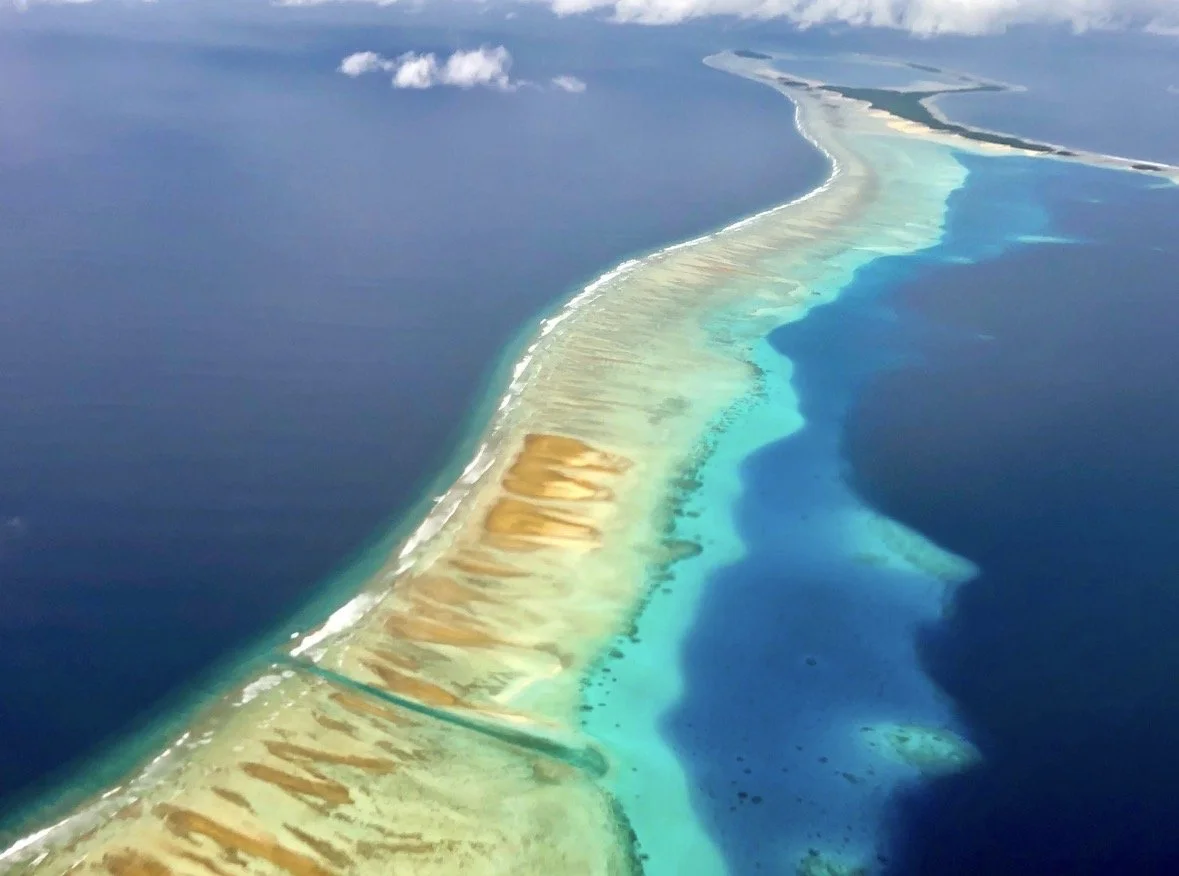
Credit: US Department of Defense, Public Domain (or Department of War? The Department is no longer consistently named, since the current US administration insists of changing the name, yet has not reached out for mandatory congressional approval. The website itself isn’t even consistent in the naming)
In 2019 the International Court of Justice issued an advisory opinion stating that Britain should end its administration of the territory and return it to Mauritius. The United Nations General Assembly later supported that position in a vote. Britain, however, has not relinquished control.
The reason is fairly straightforward.
Diego Garcia remains one of the most important military installations in the world. Its location allows aircraft to reach strategic regions within hours while remaining far from potential adversaries. Prepositioned supply ships anchored in the lagoon store equipment for rapid deployment during crises. Intelligence and surveillance infrastructure on the island reportedly plays a role in monitoring activity across large parts of the Indian Ocean and Middle East.
In a world where global power competition is once again intensifying, the base has arguably become even more valuable than when it was first built. That reality has shaped more recent developments as well.
In 2025, the United Kingdom and Mauritius reached a landmark agreement regarding the future of the Chagos Archipelago. Under the terms of the deal, sovereignty over the islands would be transferred to Mauritius, while allowing the United States to continue operating the military base on Diego Garcia under a long-term lease arrangement. The agreement was presented as a compromise that attempts to address decades of legal disputes while preserving the strategic function of the base.
Of course, like most geopolitical compromises, it did not resolve everything. Questions remain about the extent to which displaced Chagossians will be allowed to return, how resettlement would work in practice, and what long-term governance of the islands will actually look like under Mauritian sovereignty.
Which makes the political question surrounding the island far more complicated than simply drawing a new line on a map.
Today, Diego Garcia exists in a strange sort of geopolitical limbo. It is simultaneously a future Mauritian territory, an active British-administered region in transition, and a critical node in the global military network of the United States. Meanwhile, Chagossian communities continue to push for recognition, compensation, and in some cases the possibility of returning to parts of the archipelago.
All of this revolves around a tropical island that, from space, looks like little more than a ring of coral in the middle of an enormous ocean. If you saw it on a map without context, you might assume it was an untouched paradise waiting to be explored. Instead, it remains one of the most restricted islands on Earth, its beaches lined not with resorts or fishing villages, but with radar installations, runways, and naval infrastructure. A quiet atoll carrying a surprisingly heavy weight in global politics.